- Valley Recap
- Posts
- ✅ AI Reality Check for Enterprise? BA Statups Secured $1.5B in Dec 💰 Enteprise AI Day Dec 11 📍
✅ AI Reality Check for Enterprise? BA Statups Secured $1.5B in Dec 💰 Enteprise AI Day Dec 11 📍

In partnership with


Enterprise AI: Reality Check
At AI INFRA SUMMIT 2025 in San Francisco, many discussions returned to a single truth. Enterprise AI adoption looks promising on the surface, but the gap between ambition and execution remains wide. Surveys show that while most large companies now report some form of generative AI deployment, only a subset are consistently achieving measurable ROI at production scale. Companies want AI to transform operations, yet many struggle to move beyond experiments. The maturity of infrastructure, governance, and internal alignment determines success far more than the model itself.
The Illusion of Progress
Enterprises often report active AI initiatives. Many have prototypes, early pilots, or small deployments inside isolated departments. These efforts create a sense of momentum, but they rarely reflect full institutional adoption. Most organizations still rely on manual processes, disconnected systems, and legacy data flows that are not ready for continuous AI workloads.
This disconnect shows up in the operational layer. AI systems require predictable data quality, consistent compute access, and reliable monitoring. IDC reports that spending on compute and storage hardware for AI deployments grew sharply in 2025, with the bulk of that investment still concentrated among hyperscalers and major cloud providers rather than traditional enterprises. Without these elements, even well designed models fail to deliver long term value. Experiments become stalled projects instead of engines for transformation.
The Missing Foundations
True enterprise adoption depends on the often overlooked components. Governance, telemetry, and capacity planning are no longer optional. They form the operating framework that allows AI systems to run safely and predictably.
Governance sets the rules for data usage, model oversight, and risk. Telemetry provides visibility into performance, cost, and behavior. Capacity planning ensures that compute and storage can handle peak demand and that models do not fail during critical operations. Without these foundations, enterprises struggle to scale AI beyond isolated demonstrations.
The Shift Toward Operational Discipline
The summit highlighted a clear shift in how enterprises approach AI. Instead of focusing solely on experimentation, many are investing in infrastructure that supports repeatable and reliable outcomes. Late‑2025 infrastructure outlooks project global AI infrastructure spending climbing toward the high hundreds of billions of dollars by the end of the decade, with accelerated servers making up the vast majority of AI server spend. This includes unified data pipelines, standardized deployment frameworks, and monitoring systems that track every step of the model lifecycle.
These investments move AI from the world of innovation labs into the core of business operations. Once enterprises treat AI as part of their production environment, adoption accelerates. Teams receive consistent inputs, leadership gains predictable outputs, and projects develop clear accountability.

Why Adoption Still Stalls
Even with progress, many enterprises struggle with culture and alignment. AI requires cross functional partnership. It depends on collaboration between technical teams, operations leaders, compliance groups, and business units. Many organizations continue to work in silos. As a result, they deploy tools without redesigning the workflows around them.
This is the root cause of many failures. Enterprises try to add AI onto old processes instead of shaping new processes around the capabilities of AI. Without structural change, gains remain limited.
Looking Ahead
The enterprise AI landscape is entering a more realistic phase. Enthusiasm has been replaced by assessment. Total AI spending is now measured in the trillions of dollars globally, with a growing share earmarked specifically for infrastructure, data center modernization, and governance rather than just model development. Companies are learning that adoption requires discipline, structure, and long term planning. The organizations that succeed will be those that treat AI as a core operational layer rather than a side project.


Upcoming Events
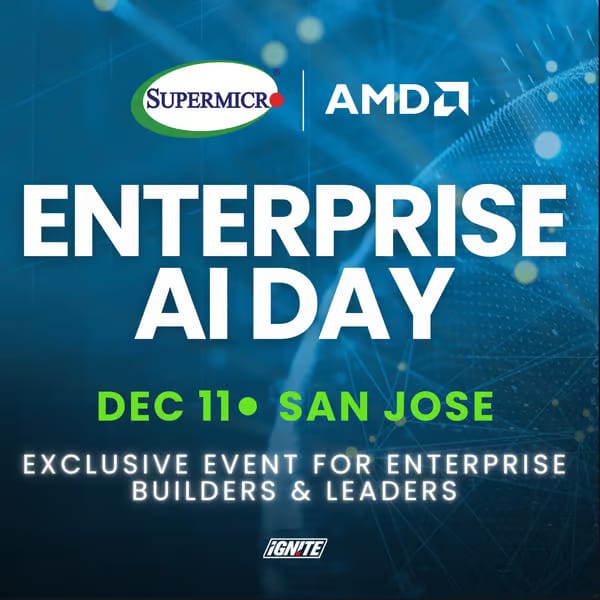
On Dec 11th Supermicro and AMD will host Enterprise AI Day at the stunning Hotel Valencia Santana Row, a half-day gathering featuring enterprise-leading panels and holiday-season networking.
Finally, on December 16, we’re teaming up with the AI Tech Leaders Club to close out the year with a hands-on workshop designed specifically for senior Technical Decision Makers in Snowflakes office in Menlo Park.

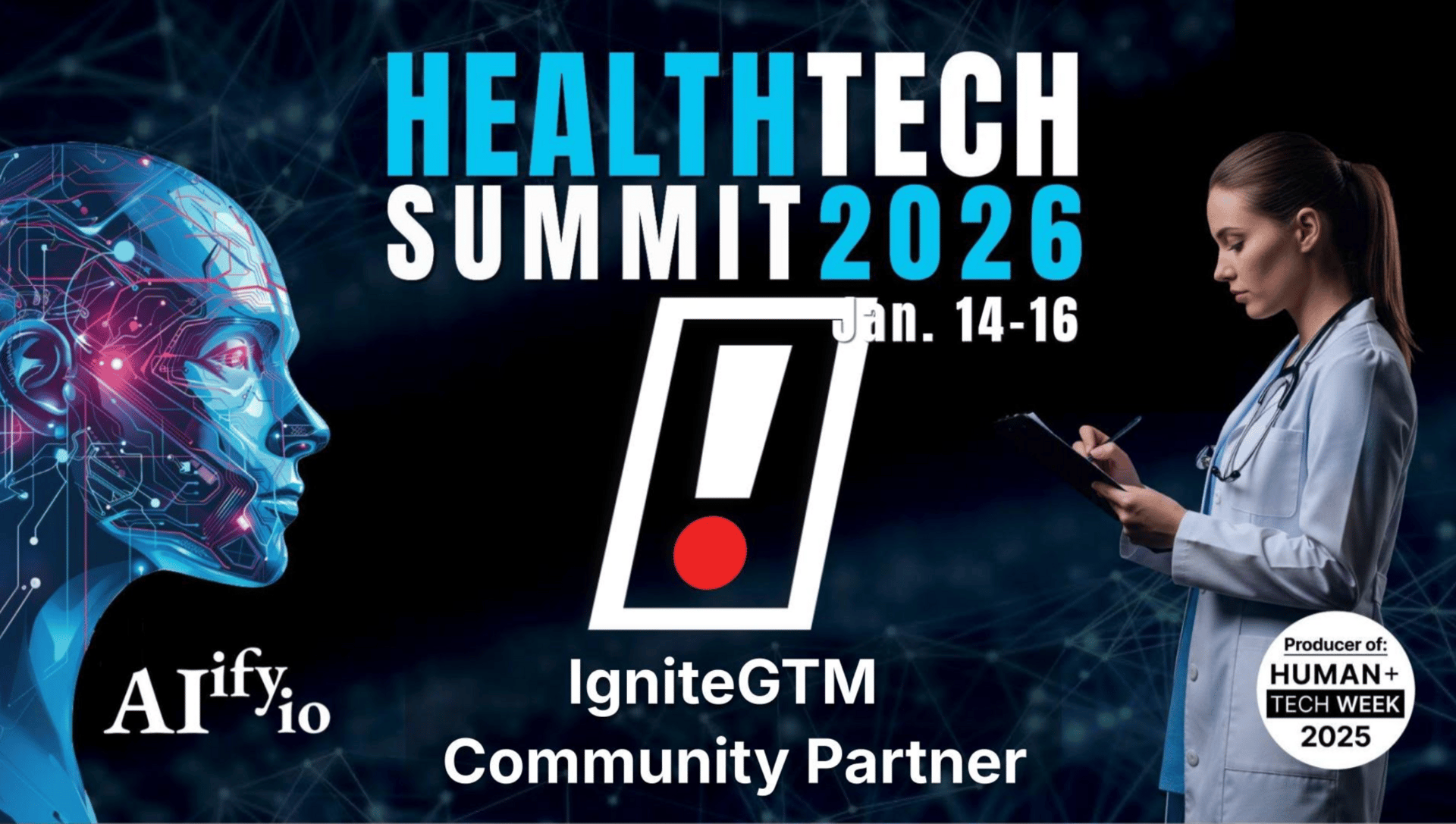
Aiify.io has increased our HealthTech Week discount to 30% in honor of Thanksgiving Week! Join us at HealthTech Week 2026 (coinciding with JPMorgan Healthcare Conf), which features the 3-day HealthTech Summit (Jan 14-16). Thanksgiving discounts are available, and you can use our code, “IGNITE30” for an additional 30% off.
This link automatically adds the code (discount is visible at checkout): https://luma.com/HTSummit=IGNITE30
Visit the event site for more information, including confirmed speakers and special events like their Startup Pitch Competition and the world's first HealthTech Wearables Fashion Show: http://HealthTechWeek.org

Bay Area Startups Collectively Secured $1.1B in December
Bay Area startups closed on $1.1B in the first week of December. There were five megadeals this week, making up more than 60% of the total: Harvey, XLight Inc., Angle Health, Axiado, and Verkada. Harvey stands out as this is the third round the company has closed this year, each one at a multiple-billions increase in valuation. Their total capital now stands well above $1B.
Exits - M&A has continued at an increased and steady pace since the beginning of the third quarter. There have now been 440 acquisitions, but only 16% (70) have disclosed prices. For those 70, the total stands just over $238B (excluding today's Netflix acquisition of Warner Bros.). Tech and biotech IPOs this year have been 3X last year's numbers, and one of each – Figma and BilliontoOne – did really well. We still have Wealthfront's IPO coming up later this month, but we'll be waiting until next year for an AI IPO (OpenAI? Anthropic?) to test the public market waters.

For startups raising capital and sales people and service providers looking for who's just closed new fundings: The Pulse of the Valley weekday newsletter keeps you current with capital moving through the startup ecosystem in SV and Norcal. Startups raising rounds and their investors; investors raising and closing funds; liquidity (M&A and IPOs) and the senior executives on both sides starting new positions. Details include investor and executive connections + contact information on tens of thousands of fundings. Check it out with a free trial, sign up here.
Follow us on LinkedIn to stay on top of what's happening in 2025 in startup fundings, M&A and IPOs, VC fundraising plus new executive hires & investor moves.
Early Stage:
Vinci closed a $46M Series A, brings physics-accurate design and simulation to the desk of any hardware engineer, at full resolution and up to 1000x faster than legacy tools.
Ricursive Intelligence closed a $35M Seed, a frontier AI lab building the compute foundation for the next generation of AI.
Mixx Technologies closed a $33M Series A, a deep-tech company solving the data-movement bottleneck for AI infrastructure.
Lemurian Labs closed a $28M Series A, a universal platform that works across any hardware and spans compiler technology and runtime orchestration, enabling organizations to write code once and deploy it seamlessly across edge, cloud and on-premise.
Raindrop closed a $15M Seed, an applied AI research company building "Sentry for AI agents" - monitoring infrastructure that catches when AI agents fail silently in production.
Growth Stage:
Harvey closed a $160M Series F, provides a unified and intuitive interface for all legal workflows, allowing lawyers to describe tasks in plain English.
Angle Health closed a $134M Series B, connects thousands of employers and their employees to transparent, affordable healthcare.
Verkada closed a $100M Series F, a cloud-based B2B physical security platform company with six product lines — video security cameras, access control, environmental sensors, alarms, workplace and intercoms — integrated with a single cloud-based software platform.
Axiado closed a $100M Series C, an AI-first company redefining platform security and system management at the silicon level.
Ripple Foods closed a $17M Series E, a leader in developing innovative and delicious dairy-free products.


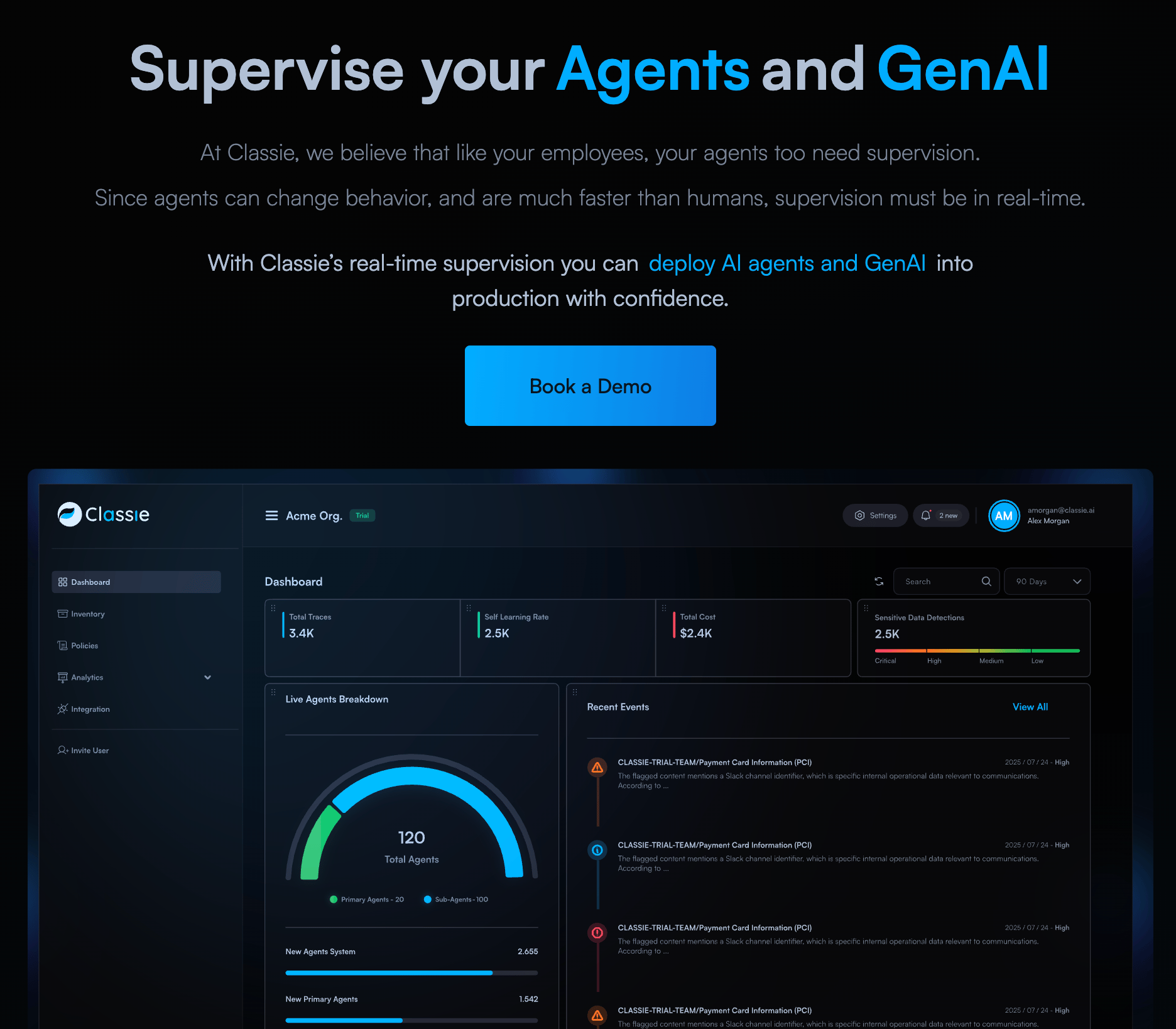
Classie AI builds an enterprise platform that gives organizations complete visibility and control across every interaction that happens between users, AI agents, data, and tools. As businesses adopt faster and more autonomous agent workflows, Classie provides a clear operational layer that keeps everything governed and secure.
What They Deliver
Real time detection and onboarding of all AI agents and applications
Full monitoring and audit trails with usage summaries and event notifications
Policy controls that reduce risk and prevent data leaks
Explainability tools that help teams understand how agents behave and why
Why It Matters
AI agents are moving into production across every industry. Teams need a way to supervise these systems, protect sensitive data, and maintain trust while still moving quickly. Classie gives organizations a stable foundation to scale AI without losing control.
Who It Serves
Enterprises that are deploying GenAI agents and need governance, compliance, and safe operations across their entire AI environment.
Learn more at Classie.Ai
Your Feedback Matters!
Your feedback is crucial in helping us refine our content and maintain the newsletter's value for you and your fellow readers. We welcome your suggestions on how we can improve our offering. [email protected]
Logan Lemery
Head of Content // Team Ignite
Run ads IRL with AdQuick

With AdQuick, you can now easily plan, deploy and measure campaigns just as easily as digital ads, making them a no-brainer to add to your team’s toolbox.
You can learn more at www.AdQuick.com